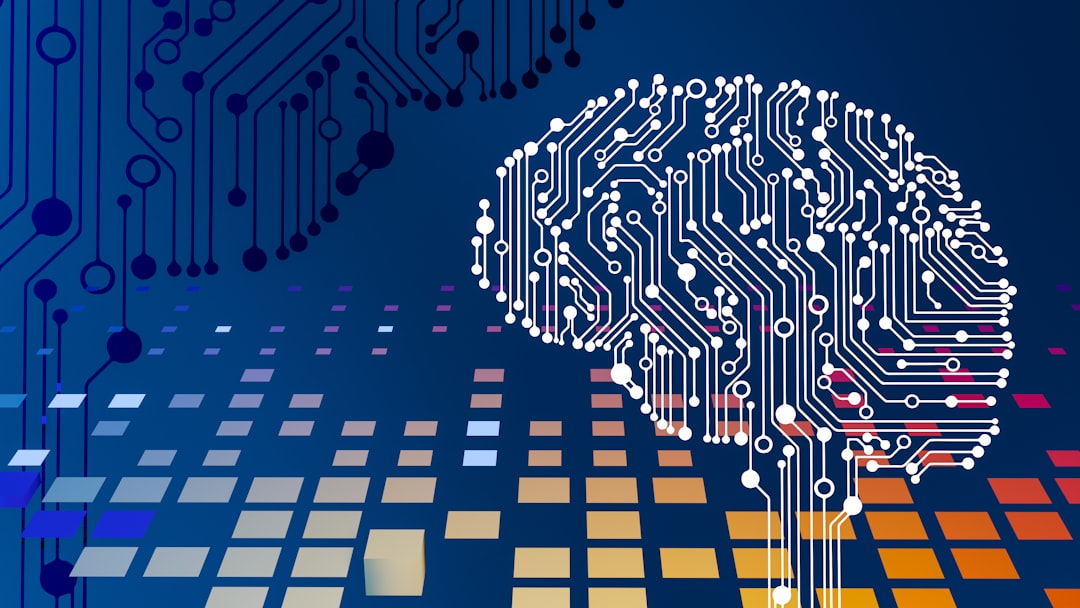
A few years ago, artificial intelligence felt like science fiction — something you saw in movies, read about in research papers, or heard tech billionaires debate on podcasts. Today, you use it before breakfast. When your phone unlocks with your face, that is AI. When M-Pesa flags a suspicious transaction on your account, that is AI. When you ask ChatGPT to draft an email, summarise a report, or explain a concept to you like you are five — that is AI.
Artificial intelligence is no longer coming. It is here. And for businesses in Kenya and across East Africa, the question is no longer "should we care about AI?" — it is "how do we use it before our competitors do?"
At Alphawonders, we do not just write about AI — we build with it. From AI-powered tutoring in our education platform to LLM integrations in client projects, artificial intelligence is already part of what we ship. This blog breaks down what AI actually is, how it works, and how businesses in Kenya are putting it to work right now.
Show Image AI is no longer a futuristic concept — it is embedded in the tools and products we use every day. Photo by Steve Johnson on Unsplash
So What Is Artificial Intelligence, Really?
Strip away the hype, and the definition is straightforward. Artificial intelligence is a branch of computer science focused on building systems that can perform tasks that normally require human intelligence. That includes recognising images, understanding language, making decisions, identifying patterns, generating content, and learning from experience.
The key word is "normally." AI does not think the way humans think. It does not have feelings, desires, or consciousness. What it does have is the ability to process enormous amounts of data, find patterns in that data, and use those patterns to make predictions or take actions — often faster and more consistently than a human could.
There are different levels of AI, and understanding the distinction matters:
Narrow AI (what exists today). Every AI system you interact with — voice assistants, chatbots, recommendation engines, fraud detection, image recognition — is narrow AI. It is designed to do one specific task very well, but it cannot generalise. The AI that beats grandmasters at chess cannot hold a conversation or write a blog post. The AI that translates Swahili to English cannot diagnose a disease. Each system is purpose-built.
General AI (what researchers are working toward). Artificial General Intelligence, or AGI, would be a system with human-level cognitive ability across all domains — able to reason, learn, and create as flexibly as a person. AGI does not exist yet. Some researchers believe it could emerge within decades; others think it may require breakthroughs we have not yet imagined. It is the central goal — and the central anxiety — of the AI field.
Superintelligent AI (the speculation). AI that surpasses human intelligence in every domain. This is firmly theoretical and mostly relevant to long-term safety discussions, not to what your business should be doing with AI today.
For practical purposes, everything in this blog is about narrow AI — the kind you can actually use, build with, and benefit from right now.
How AI Actually Works: The Core Approaches
AI is not a single technique. It is a family of approaches that have evolved over decades. Here are the ones that matter most today:
Rule-based systems were the earliest form of AI. Human experts wrote explicit if-then rules: if the patient has symptom X and symptom Y, suggest diagnosis Z. These "expert systems" worked within narrow domains but broke down when faced with ambiguity or situations their programmers had not anticipated. They were brittle.
Machine learning changed the game. Instead of programming explicit rules, you feed the system data and let it learn the patterns on its own. Show a machine learning model thousands of labelled photos of cats and dogs, and it learns to tell them apart — without anyone coding the rules for "cat" or "dog." Machine learning has three main flavours: supervised learning (learning from labelled examples), unsupervised learning (finding hidden structure in unlabelled data), and reinforcement learning (learning through trial, error, and reward).
Deep learning is a subset of machine learning that uses artificial neural networks with many layers to learn increasingly abstract representations of data. Deep learning is behind most of AI's recent breakthroughs — image recognition, speech synthesis, language translation, and generative models. Its power comes from scale: large networks, massive datasets, and enormous computing resources.
Large Language Models (LLMs) are the technology behind ChatGPT, Claude, Gemini, and similar systems. Trained on vast amounts of text, LLMs can generate human-like writing, answer questions, summarise documents, write code, and engage in nuanced conversation. They work by predicting the most probable next word in a sequence — a mechanism that sounds simple but produces remarkably sophisticated results at scale. LLMs are the AI technology that has most directly impacted how businesses operate in 2025 and 2026.

Show Image Behind every AI-powered product is code, data, and engineering — not magic. Photo by Chris Ried on Unsplash
How Kenyan Businesses Are Using AI Right Now
This is where it gets practical. AI is not just for Silicon Valley companies with billion-dollar budgets. Kenyan businesses — from fintechs to schools to retail shops — are already deploying AI in ways that directly impact their bottom line.
Financial Services and Fraud Detection
Kenya's fintech sector is one of the most advanced in Africa, and AI is at the centre of it. At Safaricom's Decode 4.0 summit just this week, Group CTO James Maitai declared 2026 "the year of AI" for Safaricom and unveiled M-Pesa Fintech 2.0 — the most significant upgrade to the platform in a decade. The update introduces autonomous self-healing capabilities, advanced fraud detection powered by machine learning, intelligent customer segmentation, and data-driven credit scoring. M-Pesa is no longer just a payments platform — it is becoming an intelligent financial layer. Banks like Equity and KCB use AI-powered credit scoring models that assess loan eligibility based on mobile money history, airtime usage, and other alternative data — extending credit to people who would never qualify under traditional banking criteria.
For businesses processing digital payments, AI-powered fraud detection is no longer a luxury — it is a necessity. The volume and speed of mobile money transactions in Kenya make manual monitoring impossible.
Customer Service and Chatbots
If you have interacted with customer support on Safaricom's app, many banking apps, or e-commerce platforms in Kenya, you have likely spoken to an AI chatbot first. These systems handle common queries — balance enquiries, order tracking, account issues — around the clock, without needing a human agent. They reduce wait times, lower staffing costs, and handle spikes in demand that would overwhelm a human team.
But the new generation of chatbots, powered by LLMs like Claude and GPT, goes far beyond scripted responses. They can understand nuanced questions, maintain context across a conversation, and provide genuinely helpful answers. This is the kind of AI integration we build at Alphawonders — connecting LLM APIs to business applications so that customer-facing tools are intelligent, not just automated. You can see more about this on our AI services page.
Education
AI in education is not theoretical in Kenya — it is already being deployed. Adaptive learning platforms adjust content difficulty based on a student's performance. AI tutors can explain concepts in multiple ways until a student understands. And administrative AI handles timetabling, grading, and parent communication.
This is an area we know well at Alphawonders. SomaSmart, our school management platform, includes AI-powered tutoring that helps students learn at their own pace. It sits alongside CBC grading, attendance tracking, M-Pesa fee collection, and a parent portal — but the AI tutoring feature is what makes it genuinely different from other school management systems in the Kenyan market. The AI does not replace the teacher; it gives every student access to patient, personalised explanation outside the classroom.
Retail and Inventory Management
For retail businesses, AI is transforming how stock is managed. Machine learning models can analyse sales history, seasonal patterns, and even weather data to predict demand — helping shop owners order the right amount of stock at the right time. This reduces waste, prevents stockouts, and improves cash flow.
This is directly relevant to what we are building with DukaOS, our point-of-sale system for Kenyan retail. While the first version focuses on inventory tracking, M-Pesa integration, and sales analytics, the architecture is designed to support AI features like demand forecasting and smart reorder suggestions in future updates. Stay tuned for that.
Agriculture
Kenya's agricultural sector is embracing AI through drone-based crop monitoring, satellite imagery analysis, and predictive models for weather and pest outbreaks. Companies like Apollo Agriculture use AI to assess farm productivity and deliver personalised recommendations to smallholder farmers. The potential here is enormous — agriculture employs over 30% of Kenya's workforce, and even small efficiency gains translate to significant economic impact.
Healthcare
AI-powered diagnostic tools are being piloted across Kenya, helping clinicians detect conditions from medical images — tuberculosis from chest X-rays, diabetic retinopathy from eye scans — with accuracy that matches or exceeds human specialists. In a country where the doctor-to-patient ratio is stretched thin, AI does not replace medical professionals; it extends their reach.
We have direct experience building for regulated healthcare environments. OversightIQ, a clinical trials risk management platform we delivered, uses real-time data dashboards and risk-based quality management — the kind of data-intensive, compliance-heavy work where AI and smart analytics make a measurable difference.

Show Image AI adoption is not a solo IT project — it requires the whole team to understand what is possible. Photo by Annie Spratt on Unsplash
Generative AI: The Shift That Changed Everything
The launch of ChatGPT in late 2022 was a turning point — not because LLMs were new (researchers had been working on them for years), but because it made AI accessible to everyone. Suddenly, a small business owner in Nairobi could draft marketing copy, a student in Mombasa could get homework help, and a developer in Kisumu could generate code — all through a simple chat interface.
Generative AI — AI that creates new content rather than just classifying or predicting — has opened up use cases that were unimaginable five years ago:
Content creation. Blog posts, social media captions, product descriptions, email campaigns — generative AI can produce first drafts in seconds. It does not replace human creativity, but it dramatically accelerates the writing process.
Code generation. Tools like GitHub Copilot and Claude can write, debug, and explain code. At Alphawonders, we use LLMs as part of our development workflow — not to replace our engineers, but to move faster. When you are building platforms like mvacant with eight integrated modules, every efficiency gain matters.
Document processing. Contracts, reports, invoices, regulatory filings — LLMs can summarise, extract key information, and flag inconsistencies in documents that would take humans hours to review.
Customer intelligence. Feed your customer feedback, support tickets, and reviews into an LLM, and it can identify trends, sentiment patterns, and recurring issues that would be invisible in a spreadsheet.
The businesses that will thrive in the next five years are not the ones that are afraid of AI. They are the ones that learn to use it as a tool — the way businesses learned to use the internet, mobile phones, and cloud computing before it.
The Risks and Questions That Matter
AI is powerful, but it is not infallible. And any honest conversation about AI has to include its limitations and risks.
AI can be wrong. LLMs sometimes generate plausible-sounding but factually incorrect information — a phenomenon known as "hallucination." This means AI outputs need human review, especially for anything involving medical advice, legal documents, financial decisions, or public-facing content. Trust, but verify.
Bias is real. AI systems learn from data, and data reflects the world as it is — including its biases. Facial recognition systems have shown lower accuracy for darker-skinned faces. Hiring algorithms have reproduced gender bias. Credit scoring models have perpetuated racial disparities. Addressing bias requires diverse training data, rigorous testing, and a willingness to ask whether certain applications of AI should be deployed at all.
Jobs will change. AI will automate some tasks, augment others, and create entirely new roles. The transition will not be painless, particularly for roles involving routine cognitive tasks — data entry, basic analysis, standard writing. But AI also creates demand for new skills: prompt engineering, AI training and evaluation, data governance, and human-AI collaboration. The net effect on employment will depend heavily on education and policy.
Data privacy matters. AI systems need data to learn, and that data often includes personal information. How it is collected, stored, and used raises serious questions — questions that Kenya's Data Protection Act of 2019 is beginning to address. Any business deploying AI needs to think carefully about data governance.
Security is not optional. AI systems can be manipulated through adversarial inputs, and the models themselves can be valuable targets. Securing AI infrastructure — from the data pipeline to the deployed model — is a non-negotiable part of responsible AI adoption.
What AI Is Not
It is worth being direct about this: AI is not conscious. It does not have feelings, understanding, or subjective experience. Large language models produce text that sounds remarkably human, but they operate through pattern recognition and statistical prediction — not comprehension. This distinction matters because anthropomorphising AI leads to misplaced trust, unrealistic expectations, and poor decisions.
AI is also not a magic wand. It will not fix a broken business model, compensate for bad data, or replace the need for human judgment. It is a tool — an extraordinarily powerful one — but like any tool, its value depends entirely on how it is used.

Show Image AI works best when it is built on solid data and clear business objectives — not hype. Photo by Luke Chesser on Unsplash
How to Start Using AI in Your Business
If you are a Kenyan business owner or decision-maker reading this and thinking "this sounds relevant but I do not know where to start," here is a practical framework:
Start with a problem, not a technology. Do not adopt AI because it is trendy. Identify specific pain points in your business — slow customer response times, manual data entry, unpredictable inventory, inconsistent quality checks — and then ask whether AI can solve them. The best AI implementations are the ones that address real business needs.
Experiment with tools that already exist. You do not need to build a custom AI system from scratch. Start with tools that are already available: use Claude or ChatGPT for content drafting, customer research, and document processing. Use AI-powered analytics in your existing platforms. Test an AI chatbot for customer service. Get comfortable with AI as a user before investing in custom development.
When you are ready to build, work with people who have done it before. Custom AI integration — connecting LLM APIs to your business applications, building intelligent dashboards, creating AI-powered features in your products — requires both software engineering skill and AI expertise. This is what we do at Alphawonders. We have integrated AI into real products — SomaSmart's AI tutoring, OversightIQ's risk analytics — and we can do the same for your business.
Think about data from day one. AI runs on data. The quality, quantity, and organisation of your data determines what AI can do for you. If your business data lives in scattered spreadsheets, paper records, and disconnected systems, step one is getting it into a clean, structured, accessible format. This is where good software development and system administration lay the foundation for everything AI can offer later.
The Bottom Line
Artificial intelligence is not a future technology — it is a present-day competitive advantage. Kenyan businesses are already using it to detect fraud, serve customers, educate students, manage inventory, and make smarter decisions. The tools are accessible, the cost is falling, and the gap between businesses that use AI and those that do not is widening every month.
You do not need to understand every algorithm or train your own model. You need to understand what AI can do for your specific business, and work with a team that can make it happen.
That is what we do.
Build Smarter Products with AI — Talk to Alphawonders
SomaSmart already has AI-powered tutoring. We integrate Claude, GPT, and custom models into real products that serve real users. From intelligent chatbots to data-driven dashboards to LLM-powered features — we build AI that works.
See our AI services or start a conversation about your project.